
There’s a particular kind of optimism involved in buying a planner.
You picture yourself writing things down, remembering appointments, and knowing what’s for dinner before everyone in the house starts opening cabinets with increasing hostility.
Then Tuesday happens.
The planner is somewhere. Dinner is still a concept. And you’ve spent twenty minutes researching drawer organizers while standing beside a drawer you cannot close.
That’s the energy behind my ADHD Must-Haves idea list: practical things for the parts of everyday life that somehow require an unreasonable amount of administration.
As an Amazon Associate I earn from qualifying purchases. This post contains affiliate links, which means I may earn a commission if you purchase through them, at no additional cost to you.
Dinner cannot keep arriving as a surprise

I would like to speak to whoever decided dinner needs to happen every single day.
We just did this. There were dishes.
And yet, here we are again, staring into the fridge as though the ingredients might volunteer.
A magnetic meal planner on the fridge makes sense to me because that is where the dinner problem lives. A plan tucked inside a notebook requires me to remember both the plan and the notebook. That feels like additional staffing.
I also think a meal plan needs permission to be deeply unimpressive.
“Pasta” counts. “Leftovers” counts. “Something from the freezer, investigate later” is at least a direction.
The point is to make one decision ahead of time so that tired, hungry, end-of-day me has slightly less negotiating to do.
If the schedule is important, it needs to be somewhere obvious
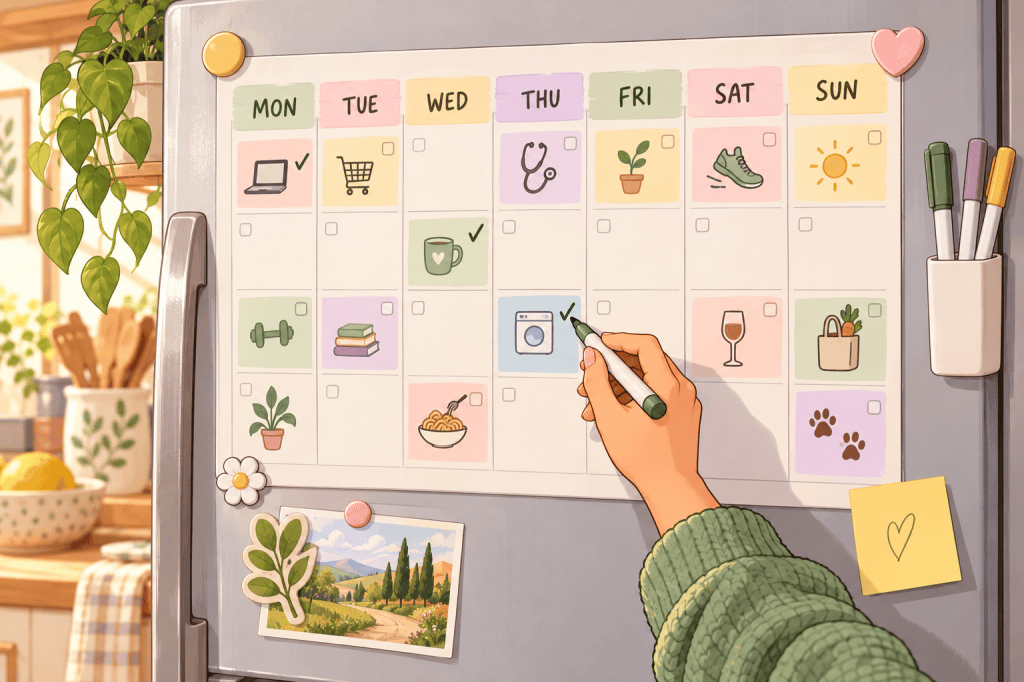
Putting something in a calendar is a lovely first step. Looking at that calendar is apparently a separate commitment.
That’s why I’m drawn to a weekly whiteboard for the fridge. Something visible while I’m getting milk has a better chance of being seen than something behind six taps on my phone.
Ideally, it holds the things that actually affect the week: appointments, activities, deadlines, and the evening when nobody should expect an ambitious dinner.
Keep the magnetic markers attached to it, too. Otherwise, updating the calendar becomes a search for a pen, and suddenly I’m sorting the junk drawer with an appointment still unwritten.
For bigger-picture planning, there’s also a large 2027 wall calendar in the list. Because occasionally I need to see that three separate things I agreed to are all happening in the same week.
Preferably before that week begins.
I need my drawers to stop requiring excavation
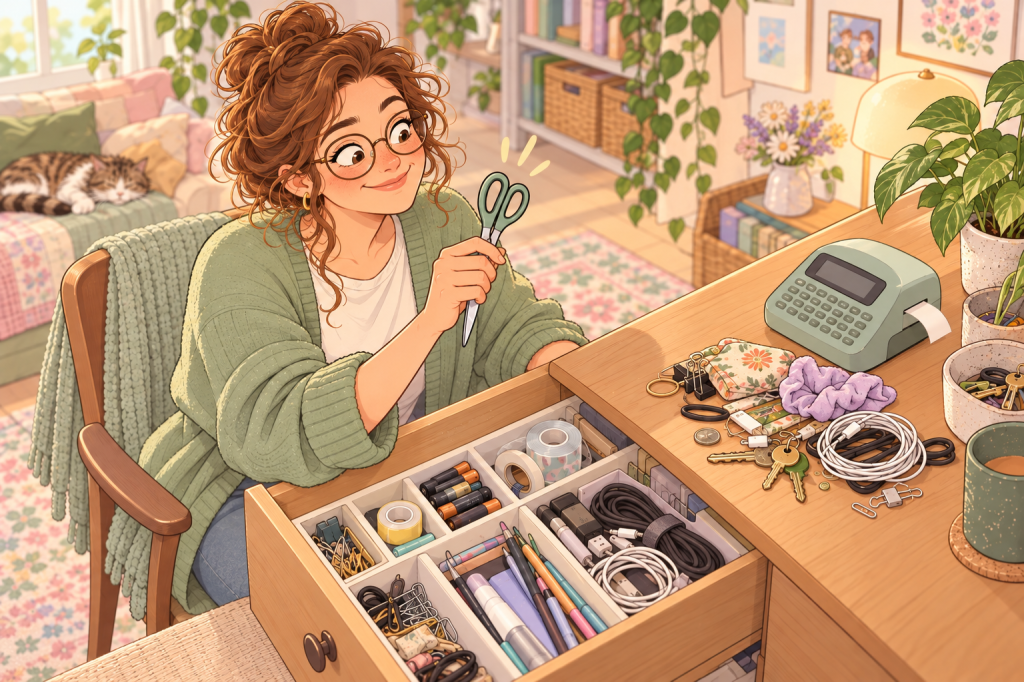
There’s a point where a drawer stops being storage and becomes a place you put something when you’re willing to never see it again.
Scissors. Batteries. The good lip balm. A charging cable for a device that may no longer live here.
Simple drawer organizers appeal to me because “put it back” gets easier when there is an actual place to put it.
The scissors go here. The batteries go there. The mysterious little metal piece can have its own compartment until someone discovers what it belongs to.
And the label maker? That’s for the moment when “everyone knows where this goes” turns out to be a wildly optimistic household policy.
I don’t need the inside of a drawer to look ready for a photoshoot. I would just enjoy finding tape without lifting eleven unrelated objects.
My to-do list needs to stop assigning me a second job

Some to-do lists start reasonably.
Make an appointment. Reply to an email. Put away the laundry.
Then, somewhere around item seven, they become a proposal to reorganize the entire house and develop a new personality before lunch.
A daily to-do notepad is something I’d use with strict limits: a few priorities, enough room to write down the next step, and no expectation that one sheet of paper can contain every unfinished thing in my life.
“Deal with paperwork” is the kind of task I can avoid indefinitely.
“Open the envelope on the kitchen counter” gives me something I can actually do.
Same with cleaning. “Clean the house” makes me want to leave the house. A cleaning checklist offers somewhere to start—provided I remember that I am allowed to do one part and stop.
Wiping the bathroom sink still counts if the mirror remains a separate situation.
I would like to know what ten minutes feels like
“Just do it for ten minutes” sounds simple until I have to maintain an internal awareness of ten minutes while also doing the thing.
That’s a lot of departments working together.
A visual countdown timer gives the time a shape I can glance at. I like the idea of setting it for a small job: clear part of the counter, fold a few things, answer the email I’ve already mentally answered six times.
When it ends, I can decide whether to keep going.
There’s also a timer with a planning board on the list for pairing “this is what I’m doing” with “this is how long I’m giving it.”
A useful arrangement when I sit down to complete one task and notice that the nearby bookshelf could use some attention.
Sometimes my hands would appreciate their own activity
There are moments when I want something to fiddle with while I listen, think, or sit through a conversation that could have been shorter.
The Pushpeel sensory activity board is one option in the list.
Sensory preferences are personal, so this feels like a “does that look satisfying to you?” purchase. For me, the appeal is simply giving my hands something intentional to do.
The corner of the notebook has contributed enough.
A book can be useful without becoming homework
I included Organizing Solutions for People with ADHD because I’m interested in organizing ideas that leave room for how a home actually gets used.
I’m less interested in creating a system that requires a weekly maintenance meeting.
With any organizing book, I think it’s fair to take one useful idea and try it. You don’t have to finish the book, overhaul every room, or purchase matching containers before you’re allowed to benefit.
Read a section. Try a thing. See whether putting the basket where the clothes already land makes more sense than continuing an argument with the floor.
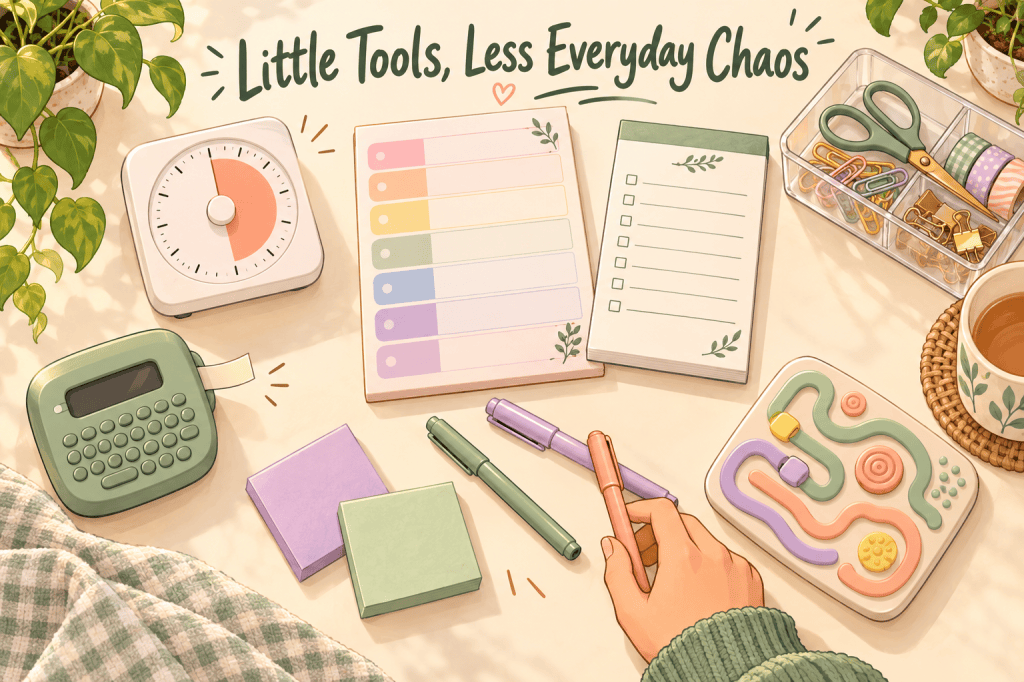
If you want to browse, I’ve gathered everything in my ADHD Must-Haves Amazon Idea List, including:
- For the dinner question: a fridge meal planner and colorful pens.
- For keeping the week visible: calendars, a magnetic whiteboard, and markers.
- For finding things again: drawer organizers, labels, and cable storage.
- For getting started: daily lists, cleaning checklists, chore charts, and visual timers.
- For something to fiddle with or read: a sensory board and ADHD-focused books and workbooks.
My suggestion is to start with the part of your day that keeps annoying you. One recurring problem. One thing that might make it easier.
You don’t need to order an entirely new life.
Besides, then you’d have to deal with all the boxes.


Leave a Reply